
Author: Conrad Aglah

  • Calgary Transforms Offices Into Vibrant New Homes

    Calgary Transforms Offices Into Vibrant New Homes

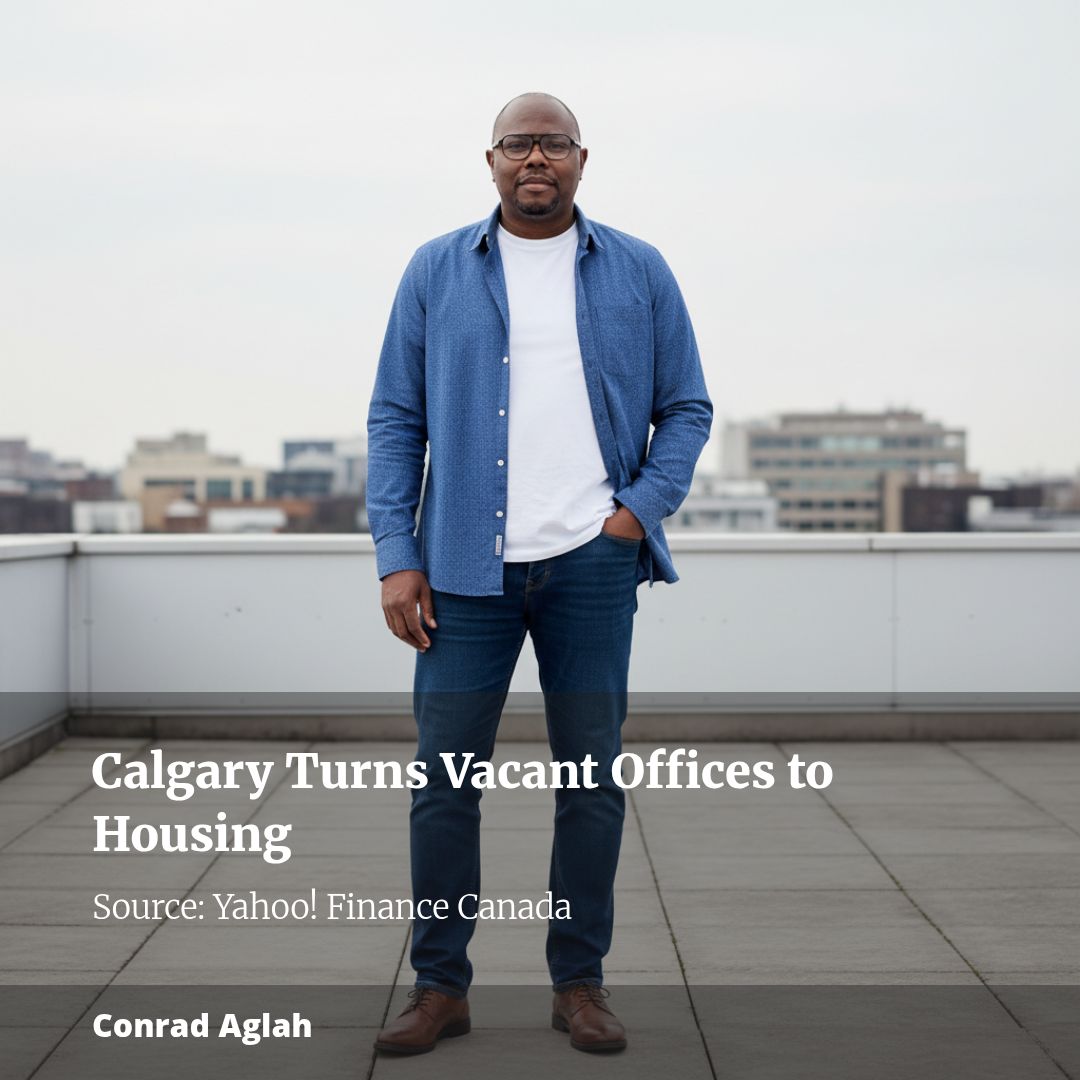
    Calgary’s downtown transformation is gaining real momentum: the city is now offering $25M in incentives to turn underused office buildings into much-needed housing and hotels. Since 2021, we’ve already seen 2.68 million square feet—once empty office space—converted into 2,667 new homes and a hotel. That’s approaching halfway toward the city’s ambitious 10-year goal of converting 6 million square feet. For those watching the Calgary market, this shift isn’t just a headline—it’s a signal for investors, homeowners, and renters alike. The impact on neighbourhood trends, rental supply, and long-term ROI can’t be ignored. As someone who pairs market data with financing know-how, I’m always analyzing how these developments shape opportunities for buyers, sellers, and investors. Understanding how big moves like this affect your next step is what turns market news into smarter property decisions.

    Continue to full article

  • Several Alberta cities rank in the national top 10 as best for renters

    Several Alberta cities rank in the national top 10 as best for renters

    Noteworthy news for renters and investors: four Alberta cities have landed in Canada’s top 10 best places to rent. Camrose takes 2nd, Calgary ranks 6th, Leduc is 7th, and Wood Buffalo comes in at 9th—each seeing declining rents. Several other Alberta markets also made the national top 50. Regina claims the top spot overall. For those considering their next move or weighing investment opportunities, these rankings highlight Alberta’s evolving rental landscape and the potential for better affordability and returns. My approach always combines local market data with a deep dive into neighbourhood trends and long-term ROI—key elements for making confident, informed real estate decisions in Calgary and beyond.

    Continue to full article

  • Is Calgary’s 30% office vacancy a crisis or opportunity? How the city plans to turn empty towers into new housing

    Is Calgary’s 30% office vacancy a crisis or opportunity? How the city plans to turn empty towers into new housing

    Calgary’s downtown office vacancy rate stands at 30%—a figure that sparks a lot of debate. Is it a crisis, or can we turn it into an opportunity? As someone who tracks these shifts closely, I see the city’s $25M incentive for converting empty office space into homes and hotels as a smart, strategic move. Since 2021, Calgary has transformed 2.68 million square feet of office space into 2,667 new homes and a hotel, effectively reducing downtown office supply by nearly 2.7 million square feet. While the boost in rental supply will be gradual, this is a significant step toward revitalizing our core and expanding housing options for buyers and investors alike. For anyone considering how these changes might impact investment potential, neighbourhood trends, or future property values, understanding the data behind these conversions is key. As always, my goal is to help you navigate Calgary’s evolving real estate landscape with clarity and confidence.

    Continue to full article

  • Canada Fee Cuts Could Unlock Supply

    As someone who tracks every angle of Calgary’s housing market—from new construction to investment properties—I’m always looking at what really drives affordability and supply. Recent analysis from our national housing agency highlights just how much development fees can impact the viability of new homes: reducing these fees could make about 14% more residential projects possible nationwide. The upside is especially pronounced for cities like Toronto and Vancouver, where eliminating charges could boost viable projects by around 10%. Notably, Toronto could potentially address half its stated housing supply need with such changes.

    Here in Calgary, the numbers put things in perspective: development fees range from roughly $4,000 for a one-bedroom high-rise to about $9,000 for a detached home—well below Vancouver’s $20,000–$33,000 for similar units. Of course, these fees fund critical infrastructure—roads, sewers, administration—so the goal isn’t to drop them to zero, but to strike a balance that supports both community growth and attainable homeownership.

    For families and buyers seeking larger, new homes, lower fees could help bring more options to the market, especially as the price gap between new builds and comparable resale homes continues to challenge many. I believe understanding these cost drivers is an essential step toward making smarter property decisions—whether you’re a first-time buyer, investor, or looking to move up. As always, I’m here to break down the numbers and help you see the bigger picture in Calgary’s evolving market.

  • Canada: Rate Cuts Can Worsen Affordability

    There’s a common belief that cutting interest rates will solve Canada’s housing affordability issues—but the reality is more complex. Recent central bank research shows that while lower rates can spark a quick jump in home resales (with the full impact appearing 18 to 24 months later), new housing supply doesn’t catch up until roughly two years down the line. That lag means easier borrowing often boosts demand long before we see more homes built, which can actually push prices higher in the short term.

    In my work as a REALTOR® and mortgage expert here in Calgary, I see firsthand how strong labour markets—like we have now—can make this effect even stronger. When people feel confident about their jobs and financing is accessible, buyers move fast. But for builders, the process is slower. Higher prices and cheaper financing do help make new projects viable, but construction, permitting, and planning (especially for multi-unit homes) are lengthy undertakings.

    So while rate cuts may eventually encourage new supply, the delay means monetary policy alone isn’t a silver bullet for affordability. Smart property decisions require understanding both the immediate impacts and the long game—something I aim to break down in all my educational content and client strategies.

  • Calgary Sales Slowed, Prices Eased Overall

    Here’s a quick breakdown of Calgary’s Mid-Q3 real estate trends—insights I find crucial for anyone considering a move, an investment, or a strategic shift in the property market. Sales activity slowed, with 1,660 transactions recorded—about 16% fewer than last year. The residential benchmark price eased to $570K, reflecting a subtle dip of nearly 1%. If you’re watching condos, you’ll note this segment drove much of the softening: apartment benchmarks settled at $295K (down 8% year over year), and row homes averaged $415K after a 5% annual decline. Detached homes held relatively steady, with benchmarks at $744K (off just 1%), while semi-detached properties saw a modest gain, now at $691K.

    On the supply side, new listings were at 3,140—down 10% from last year—while total inventory inched down to 6,510 homes. What’s particularly interesting for buyers and investors: supply improved at the higher end of the market, while strong rental conditions have made some would-be buyers hit pause, especially at more affordable price points.

    As always, I approach these numbers with a blend of data, financing strategy, and local experience. Whether you’re entering the market, repositioning your portfolio, or just keeping an eye on trends, understanding these shifts is key to smarter real estate decisions in Calgary.

  • Calgary Rental Market Offers Affordable Options Amid Housing Changes

    Calgary Rental Market Offers Affordable Options Amid Housing Changes

    Calgary’s real estate landscape is shifting—recent numbers show 1,660 homes sold, a 16% decrease in the residential resale market. The benchmark price edged down 1% to $569,800. While apartment values dropped 8.2% and row homes also declined, detached homes remained steady at $744,300. Interestingly, luxury properties still saw an uptick in sales. For many buyers, especially those eyeing the move from renting to ownership, these trends add a new layer of complexity to decision-making. Having guided clients through similar cycles, I always stress the importance of understanding how market dynamics, price shifts, and mortgage options intersect. Whether you’re a first-timer or looking to invest, navigating these changes with a clear, data-driven plan is key to building long-term real estate wealth in Calgary.

    Continue to full article

  • Homebuyers Find Great Deals on Detached Homes in Calgary

    Homebuyers Find Great Deals on Detached Homes in Calgary

    Calgary’s detached home prices are showing some interesting shifts this year. The city overall saw a 1.09% year-over-year decrease for detached homes, but the northeast stands out with a more pronounced 6.44% drop. North and East Calgary also trended down, while both West Calgary and the city centre bucked the trend with price increases. On the condo side, apartment prices slipped by 8.18%, whereas semi-detached homes actually edged up by 0.98%.

    As someone who’s passionate about helping buyers and investors decode these numbers, I always remind clients: real estate is hyper-local, and every neighbourhood tells its own story. Whether you’re considering your first purchase or fine-tuning your property portfolio, understanding both the data and the financing landscape is key. My approach blends market analytics with practical mortgage strategies so you can make informed, confident decisions—no matter which part of Calgary you’re exploring.

    Continue to full article

  • Calgary Home Buyers Enjoy Lower Prices and More Choices

    Calgary Home Buyers Enjoy Lower Prices and More Choices

    August brought notable shifts to Calgary’s real estate landscape. Home sales dropped 16.4%, with 1,660 properties changing hands. The benchmark price edged down 1.1% to $569,800 year-over-year. Within the details: apartment prices fell 8.2%, row homes dipped 5.4%, detached homes were down 1.1%, while semi-detached properties saw a slight uptick of 1%. Both new listings and inventory also declined, tightening choices for buyers and sellers alike.

    For those navigating the market—whether you’re a first-time buyer, upsizing, downsizing, or investing—these numbers highlight the importance of interpreting data, not just headlines. My approach weaves together real market stats, tailored financing strategies, and on-the-ground experience to help you see beyond the surface. In a changing market, clarity, precision, and a disciplined plan make all the difference in your real estate decisions.

    Continue to full article

  • Canada Rents Show Early Stabilisation

    We're seeing early signs of stabilization in Canada's rental market. Average asking rents have settled around $2,000 in early Q3—down about 4% year-over-year, but showing a slight increase of less than 1% month-over-month. This is actually the smallest annual dip since early Q1 2026. For nearly two years, rents declined on a yearly basis, but the last four months have brought steady, incremental gains after a prolonged low. That shift hints at seasonal momentum, likely boosted by back-to-school demand, and a market starting to find its footing.

    Purpose-built rentals have shown the most resilience, with average rents down just 3% year-over-year and three-bedroom units holding steady. Condo apartments saw a sharper drop (about 6%), with houses and townhomes down 8%. Nationally, both apartment and condo rents are averaging close to $2,000, marginally up from late Q2. Toronto is especially interesting—rental listings are down 6% year-over-year and rents are edging toward positive territory.

    The overall takeaway: we’re not seeing a full recovery yet, but signs point to stabilization. For those navigating decisions—whether you’re exploring your first investment property, planning a move, or simply trying to make sense of changing market dynamics—having a clear, data-driven perspective is essential. My approach always combines up-to-the-minute market analysis with tailored mortgage and investment strategies, so you can move forward with confidence, even as the landscape shifts.